

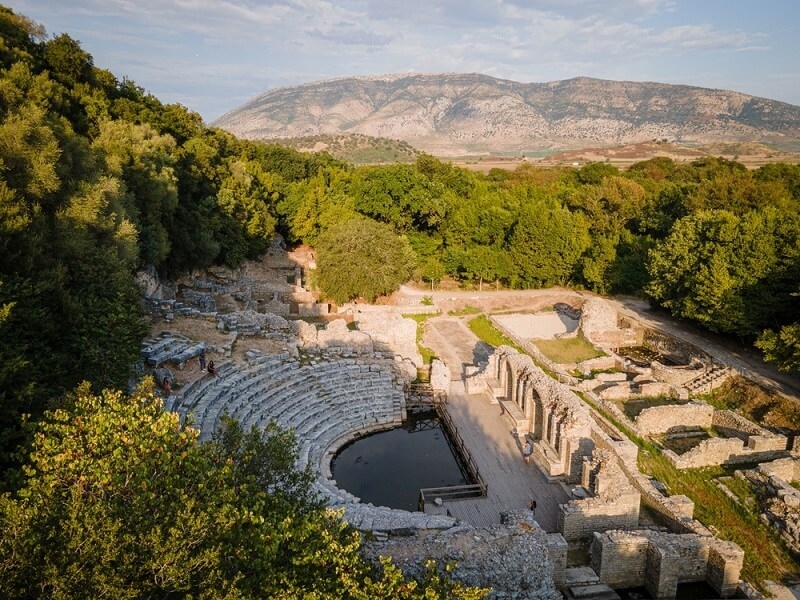
Walking through the ruins of Butrint feels less like sightseeing and more like drifting through a half-remembered story. You are surrounded by stones, sure, but also by quiet pauses, unexpected views, and that strange sense that time here moves differently. This blog walks you through what it is like to experience Butrint National Park in a slow, human way. We will talk about the ruins themselves, Albania’s deeper history, and why this corner of the Balkans resonates so strongly with American travelers looking for something real, not rehearsed.
Butrint National Park is not the kind of place you rush through with a checklist. It invites you to linger, to wander, to let your thoughts roam alongside the crumbling walls.
You arrive expecting ruins. What you get instead is a landscape that feels alive. Tall trees cast uneven shadows, birds cut through the silence, and the air smells faintly of water and leaves. The ruins appear slowly, almost shyly, as if they are deciding whether you are worth revealing themselves to. Honestly, that slow reveal is part of the magic.
Here’s the thing. Butrint National Park blends nature and history so seamlessly that it is hard to tell where one ends and the other begins. Unlike more polished sites, this one keeps its rough edges. That rawness makes it feel honest. You are not just observing history; you are walking through it.
Once you are inside, the Butrint ruins begin to unfold like chapters in a long novel. Each section feels distinct, yet connected.
Greek foundations sit beneath Roman expansions, which sit beneath Byzantine additions. It sounds academic, but when you are there, it feels surprisingly personal. You step from one era into another without noticing the shift. It is like flipping radio stations mid-song and realizing both tracks still make sense.
There will be pauses. A stone doorway framed by greenery. A stretch of wall catches the afternoon light just right. You might stop without meaning to. That is normal. Butrint has a way of gently pulling your attention away from your phone and back into your body.
Don't Miss: Waves and Wonders Await in These Top USA Coastal Towns
Seeing Albania's ancient ruins like Butrint changes how you think about the country itself. It fills in gaps you did not even know were there.
You know what? Albania often gets skipped in favor of louder destinations. Italy. Greece. France. Yet Albania holds its own, quietly. Its ruins feel less staged, less crowded, more willing to meet you halfway. That sense of discovery still exists here, and it matters.
Yes, you might think of Pompeii or Ephesus. That is natural. But comparison only goes so far. Those places impress you. Butrint, on the other hand, speaks to you. It is softer, humbler, and in some ways, more emotionally accessible.
What sets Albania's ancient ruins apart is how close they feel. There’s less glass, fewer ropes, and more space to stand still and imagine. You’re not separated from the past by layers of presentation.
Another quiet surprise is how these ruins coexist with modern life. Villages nearby are not frozen in time; they are lived in. That continuity softens the experience. History does not feel boxed up or finished here.
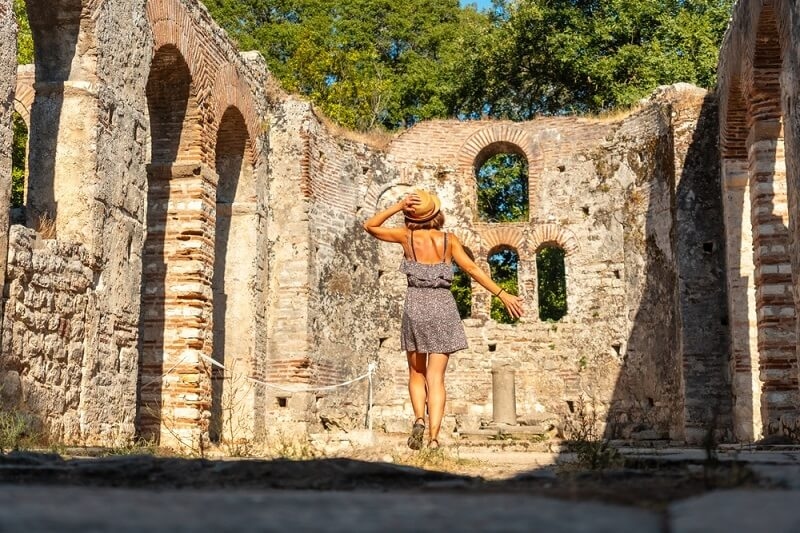
The Butrint archaeological site rewards curiosity. The more attention you give it, the more it gives back.
The ancient theater is small, almost modest. Yet standing there, you can imagine voices carrying across the stone seats. Laughter. Debate. Applause. It does not take much effort. The setting does half the work for you.
Roman baths, early Christian basilicas, public spaces. These structures hint at daily routines rather than grand events. And that is refreshing. You are reminded that history is not only made by emperors, but also by people grabbing a bath after work or gathering for worship.
Some of the most telling details are easy to miss. Defensive walls, narrow gates, and elevated viewpoints speak quietly about control and protection. They suggest a city that understands its vulnerabilities.
Scattered sanctuaries and altars appear almost unexpectedly along the paths. Many sit partially open to the elements, softened by time and weather. Standing there, you sense how belief is once blended into everyday movement.
Also Read: Top Romantic Getaways in USA for Couples: Plan Your Escape
Being one of the UNESCO sites in Albania gives Butrint a certain weight. But that status is quieter than you might expect.
UNESCO recognition is not just about importance. It is about responsibility. It tells visitors that this place matters, not as a photo backdrop, but as a shared human inheritance. That idea sits with you as you walk.
There is always tension between keeping a site intact and letting people experience it. Butrint handles this balance fairly well. Paths are clear, signage is helpful, and yet the site never feels overmanaged.
Butrint often becomes the gateway to other Albanian historical places. Once curiosity kicks in, it is hard to stop.
Many travelers combine Butrint with nearby coastal towns or inland cities. Gjirokaster, with its stone houses and steep streets, pairs beautifully. The contrast deepens your understanding of the region’s past.
If you are coming from the US, give yourself time. Albania rewards slow travel. A rushed schedule flattens the experience. Build in empty hours. Let places surprise you. They usually do.
Beyond the well-known stops, Albania is dotted with low-key ruins that barely make the brochures. A lone fortress on a hill, fragments of walls near a village road, a half-buried mosaic.
Read More: Best Historic Towns to Visit USA: Exploring Vintage America
Walking through Butrint National Park is not about ticking off another destination. It is about reconnecting with history in a way that feels personal and grounded. The ruins do not shout. They murmur. And if you are willing to listen, Albania reveals itself as layered, resilient, and quietly unforgettable.
Yes. It offers a gentle introduction to Albania’s history without feeling overwhelming or crowded.
Plan for at least three hours. More if you enjoy slow walks and reflective pauses.
Generally, yes, though some paths are uneven. Comfortable shoes make a big difference.
Travelers are seeking authentic experiences, and Albania still offers depth without heavy commercialization.
This content was created by AI